Our second last day, 18 October, was spent at the National Museum, full of resplendent “National Treasures”, important cultural property, illustrating Japanese history from at least the 6th century AD. An example is the Kokuzo Bosatsu of Akasagarbha, a 12th century Heian Buddhist painting of exquisite delicacy, and abundant use of silver and gold leaf. Rooms of earthenware vessels and bronze ritual items, terracotta and bronze mirrors were followed by a fascinating review of Buddhist history and art, with scrolls from Esoteric Buddhism and the court of the 9th century. Long traditional scrolls (viewed from right to left) show how important were temporal and spatial divisions, such as clouds, rocks and trees. Displays were devoted to the beginnings of Zen Buddhism in the 14th century (the first shogun government), and ink paintings of the later Muromachi period. A whole chamber is devoted to the history of the famous tea ceremony; another to military attires. Key were the samurai (“one who serves”), who dominated during the Kamakura and Muromachi eras (ironically also periods of great art). Kyoto was destroyed when the shogunate fell into decline in the Odin War (1467-77). After a century of turmoil, finally in 1600 Ieyasu reunified Japan and set up the Tokugawa shogunate in Edo (later Tokyo). The warrior class was strictly controlled. Their sword scabbards – previously gorgeously decorated – were decreed to be black and ostentation prohibited: a telling sign to experts dating items in the Edo years. Other chambers covered the gamut from screens and sliding doors, metalwork, lacquer ware, calligraphy, Noh and kabuki theatre, where actors wore elaborate masks and made highly stylized movements or did elaborate dances with music and complex plots, on to fashion, kimono robes, kanazashi hairpins, ukiyo-e (paintings of famous places, courtesans and actors) and ink paintings of every sort. We found the calligraphy particularly evocative.
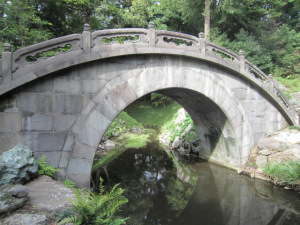
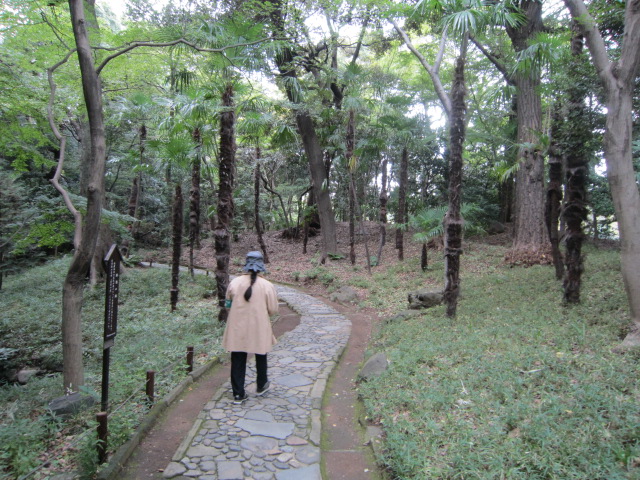
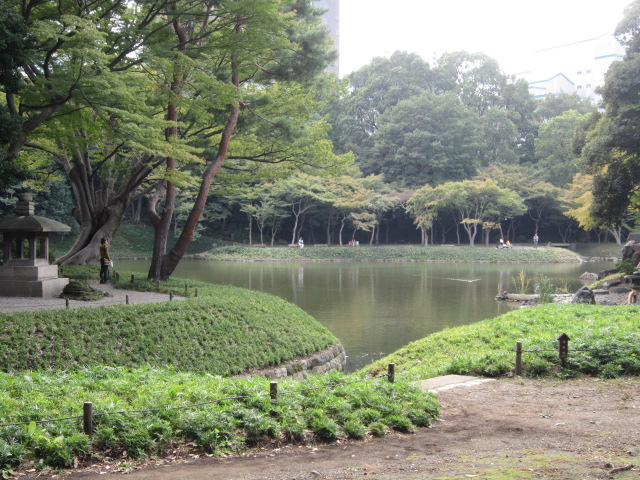
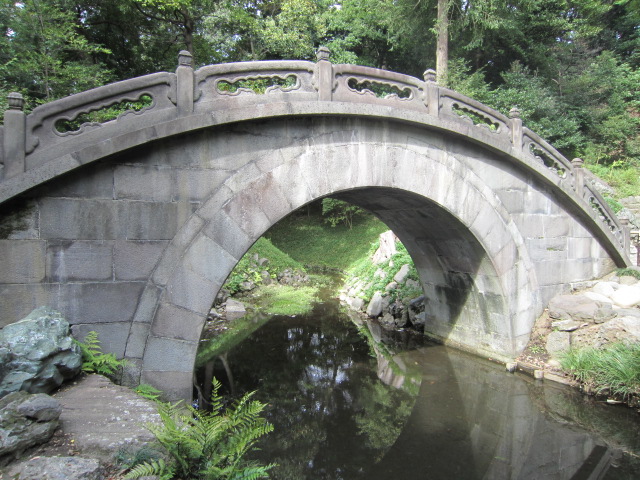
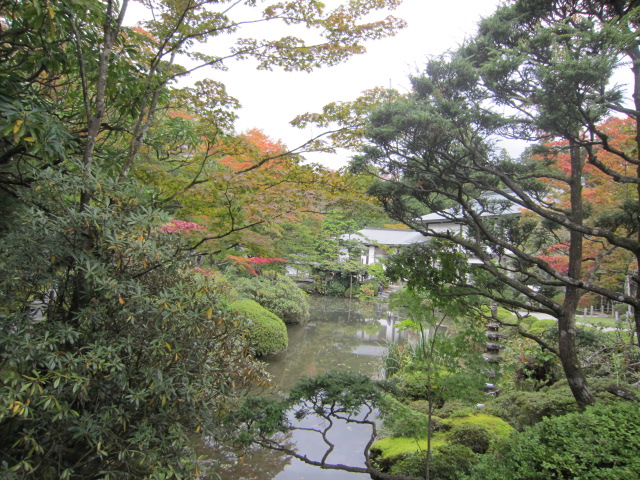
On our last day we chose to visit the Koishikawa Korakuen, next to Dome City, and unlike the Imperial Palace, almost deserted. It is one of only two surviving Edo gardens in Tokyo. It was started in 1629 and showed the power of the Tokugawa clan. Again there were Chinese features, the design influenced by the famous West Lake Garden of Hangzhou in eastern China. Scenically the garden in thrilling, with characteristic lake, half moon, bridge and plantings. There are special symbolic attributes, especially the central path that wends its way through all parts. It represents the original road from the old capital Kyoto to the new capital Edo. All roads led – not to Rome – but to the mighty presence of the Tokugawas! We regretfully left this peaceful, soul-touching place, back through bustling modern Tokyo, to the airport and thus home.
So farewell to the land of ancient Japan, the land of temples and gardens, of wonderful service and politeness, impressive efficiency, the world’s best railway system and great food. It always baffles us that more westerners, and especially Australians, don’t travel to it. Japan is one of our favourite places.

 Paul Crook